


Just before midnight on May 13, a Beech King Air C90 took off from the Roswell Air Center in New Mexico with four people on board for a short flight west to Sierra Blanca Regional Airport, near Ruidoso, to pick up a patient. Roughly 30 minutes after takeoff, it crashed into the Capitan Mountains.
At the time of the flight, the Air Force’s 746th Test Squadron of the 704th Test Group was hosting NAVFEST, its annual invitation-only two-week electronic warfare event that brings various service branches and the commercial sector to the Army’s White Sands Missile Range. The event included multiple scheduled GPS jamming exercises, according to Notices to Airmen, or NOTAMs, that I’ve read.
The Federal Aviation Administration did have a NAVFEST-related NOTAM in effect at the time of the crash. The National Transportation Safety Board investigation is expected to include whether the military GPS jamming exercise played a role in the tragedy.
Two pilots from Generation Jets, Keelan Clark and Ali Kawsara, and two Trans Aero MedEvac flight nurses, Sarah Clark and Jamie Novick, died.
Wired’s Jeff Wise wrote, “In retrospect, tragedy might have been avoided if Albuquerque air traffic control had been able to pay closer attention to the young pilots in the King Air. But tonight they were busy. Three other aircraft also reported that they’d lost their GPS and needed help. One was struggling to get a bearing on a radio beacon.”
This crash also ignited what became the Seven Cabins Fire, which consumed more than 31,000 acres over 29 days. According to a May 29 multi-agency update and multiple NOTAMs, 1,055 personnel in 38 crews on foot and also using 46 engines, 7 helicopters, 37 Water Tenders, and 11 dozers battled the blaze in a frequently GPS-degraded environment.
The takeaway here is that a single attack on a space system — even just a peace-time exercise — can have cascading effects.
You can listen to the discussion here on Substack and on most major podcasting platforms, or watch on YouTube.
The Connection to International Humanitarian Law
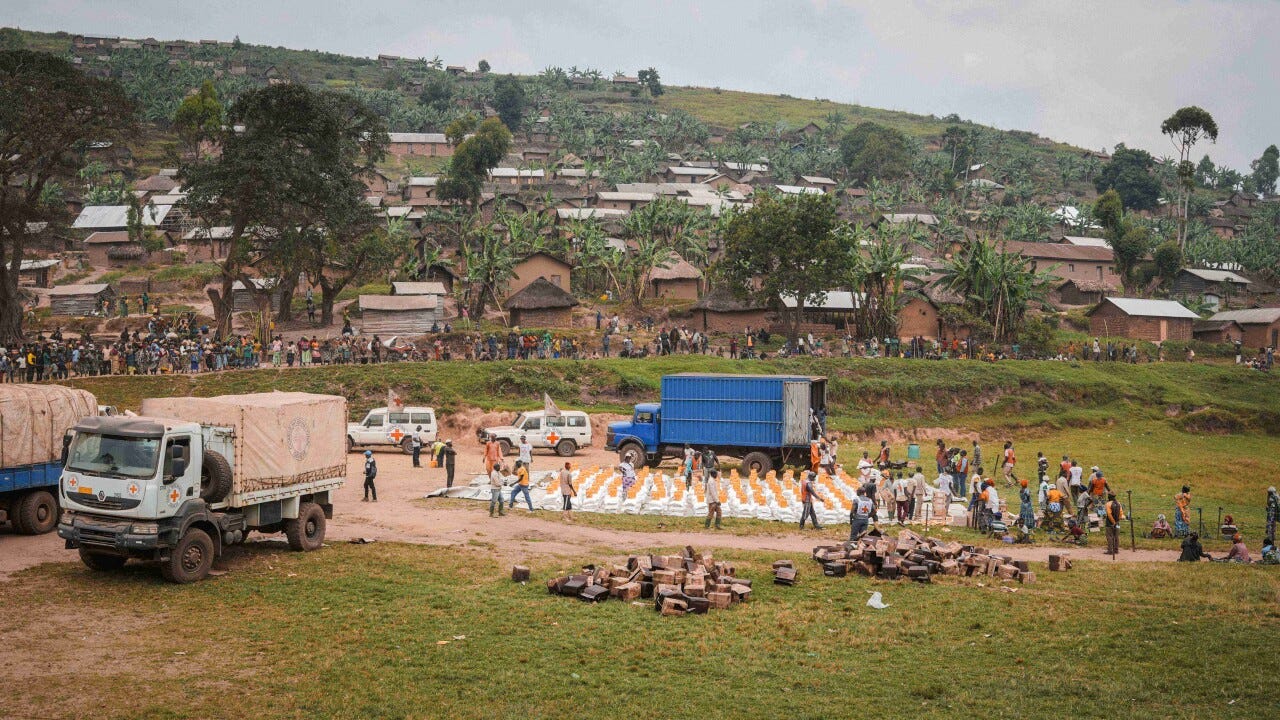
This fatal Beech King Air C90 incident occurred on uncontested peaceful U.S. soil. My guests from the International Committee of the Red Cross Regional Delegation for the U.S. and Canada say that downrange, in areas of conflict and disaster — ecological and man-made — the jamming of GPS and communications satellite signals degrades civil critical infrastructure and security, and creates challenges for humanitarian operations.


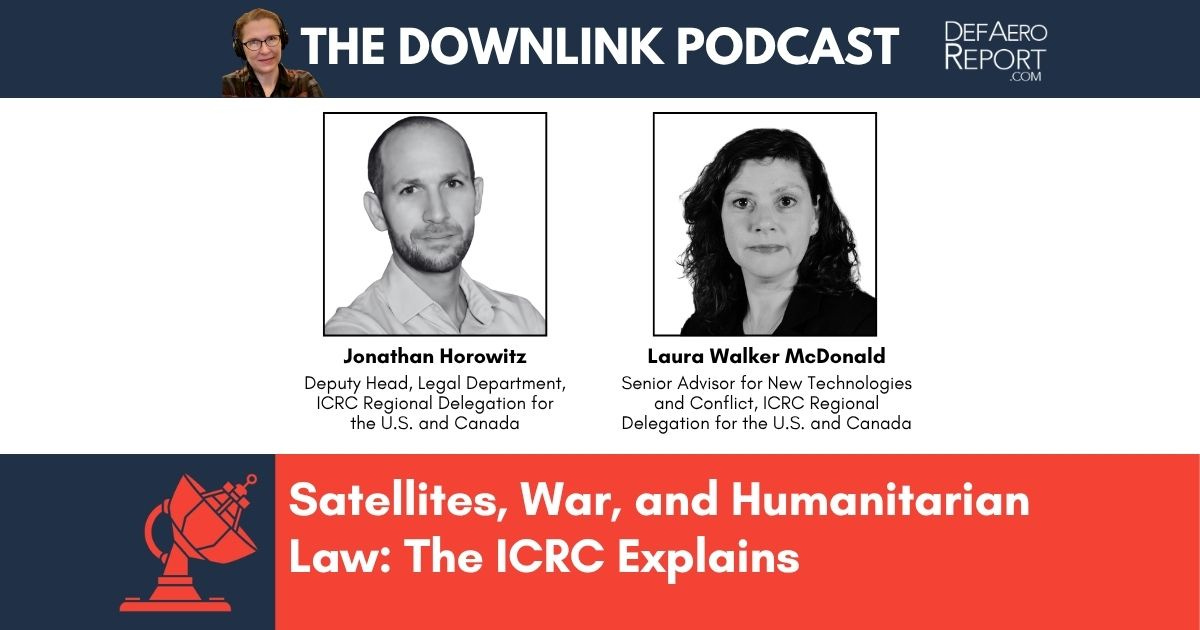
We know that satellite-based timing synchronization quietly underpins financial transactions, energy grids, and hospitals. Laura Walker McDonald, Senior Advisor for New Technologies and Conflict, and Jonathan Horowitz, Deputy Head of the Legal Department, say that the targeting and attack of space systems can have outsized effects on civilian populations, emergency services, and humanitarian operations, and even contravene International Humanitarian Law, which grew out of what was historically called the Law of War.
“A localized bit of jamming in one place might impact a small area of an electricity grid in a way that creates sort of cascading effects that might ultimately cause a real problem for the network. So, that’s just an example. But you can see this reliance in all sectors that civilians rely on from transport to hospitals to energy to communications.” - Laura Walker McDonald
If you want to take a look at current GPS jamming, GPSWise has an interactive map.
The Flip-Side of the Same Coin
Here’s the line that stuck with me. Companies using space infrastructure “do not necessarily, and often maybe rarely, have fidelity over how militaries are using their products and services in situations of armed conflict,” Horowitz says they often can’t assess whether their own infrastructure just became a legitimate military target. He calls it a “knowledge gap.” I’d call it a liability nobody’s pricing in yet.
Reading
International Committee of the Red Cross — Policy & Legal Background
Preliminary Recommendations on Possible Norms, Rules and Principles of Responsible Behaviours Relating to Threats by States to Space Systems — International Committee of the Red Cross, January 27, 2023
Working Paper on Constraints under International Law on Military Operations in, or in Relation to, Outer Space during Armed Conflicts — International Committee of the Red Cross, May 3, 2022
The Shifting Battlefield: Technology, Tactics, and the Risk of Blurring Lines of Warfare — Ruben Stewart, ICRC Humanitarian Law & Policy Blog, May 22, 2025
Our History — International Committee of the Red Cross
Space & Commercial Infrastructure


Blue Origin Lays Out Canaveral Expansion Amid Post-Explosion Rebuild — Richard Tribou, Orlando Sentinel, August 13, 2026
Data Centers in Space Emerge as Next Frontier for Insurers — Contessa Brewer, CNBC, August 14, 2026
Beyond Nuclear: Does Russia's Reported Anti-Starlink Weapon Breach the Outer Space Treaty? — Louisa Handel-Mazzetti, Articles of War (Lieber Institute, West Point), August 14, 2026
SpaceX Outlines Plans for Starship Test Site at Kennedy Space Center — Brooke Edwards, FLORIDA TODAY, August 14, 2026
Ad Astra!
Laura
AI-GENERATED TRANSCRIPT: The episode transcript text was produced using automated speech recognition. Technical terminology may contain inaccuracies. This is provided for accessibility and is not a verbatim record. Please refer to audio for the definitive version.


